


Published December 31, 2025

How Long Is a Breastfeeding Session? A Realistic Guide for New Parents
“How long is a breastfeeding session?” If you’re holding your newborn baby and wondering whether you should still be nursing 10, 20 or 40 minutes later — you’re in good company. There’s no perfect number of minutes for every mother-baby pair. Some feeds are brief and businesslike; others meander.
Both can be healthy, however, depending on milk transfer and your baby’s cues.
What matters most is what you see and hear: steady swallows, a soft body, relaxed hands and that heavy-lidded look afterward. Our guide unpacks common breastfeeding duration ranges, what changes session length and how to read feeding cues so you can feed with confidence through the early weeks and beyond.
How Long Does a Typical Breastfeeding Session Last?
Short answer: There’s a range — and that range evolves.
-
In the early weeks, many feeding sessions fall between 10 and 45 minutes. A newborn baby is learning to latch, coordinating their suck–swallow–breathe patterns, and trying to stay alert long enough to finish. It’s typical to see 20–45 minutes per nursing session from 0–6 weeks.
-
By 3 months and beyond, many breastfed babies become remarkably efficient at withdrawing human milk. Sessions often contract to 10–20 minutes, sometimes less, during alert daytime windows.
A quick nursing session isn’t automatically “incomplete,” and a long session isn’t automatically “better.” The real checkpoints are audible swallows, signs of good milk flow and a content baby afterward. Also, babies differ. Some “power feed.” Others like a slower pace. Each breast is a little different too; milk production, storage capacity and milk letdown can vary breast to breast and day to day.
Sign up to get the scoop on feeding, sleep, poop, and so much more. By singing up for email, you are to receive marketing emails from Bobbie and can manage your email preferences or unsubscribe at anytime

Your go-to resource for all things new baby.
Factors That Influence How Long Your Baby Nurses
Age and Stage
In the early weeks, stamina is the limiter. As infant feeding skills mature, milk transfer per minute improves, and breastfeeding duration tends to decrease. Around 4–6 months, curiosity spikes and distraction can pull a baby off the breast to watch the world. Dimmer lights or a quieter corner can extend feeding time when attention scatters.
Feeding Efficiency
Efficient latch = efficient milk transfer. Oral strength, tongue mobility and practice all contribute. If you’re experiencing lipstick-shaped nipples, pinching pain, or blistering, a small positioning tweak or different breastfeeding positions (football hold, side-lying, laid-back) can shrink a 45-minute feed to 20 because milk moves more readily.
Letdown and Flow
A brisk milk letdown and fast milk flow often shorten sessions; gentler flow may stretch them out. If letdown feels forceful (gulping, coughing, clicky sucks), try a laid-back position so gravity softens the stream — or hand-express the initial surge for 30–60 seconds before latching. If the flow is slow, compressions can help.
Growth Spurts and Cluster Feeding
Expect frequent feeding bursts (especially in the evenings). These flurries — sometimes nearly back-to-back nursing — push milk supply upward and typically pass within a few days. During these longer periods, keep water and snacks nearby and lean into skin-to-skin.
Time of Day and Environment
Night feeds are often longer and calmer; daytime can be snack-like. Temperature, noise, light and even your shirt fabric can sway your baby’s feeding pattern.
Breast–Bottle Transitions
Bottles deliver a constant flow, so bottle sessions can be faster than breast sessions. If you toggle between exclusive breastfeeding and formula feeding, overall feeding time may shift. If a switch coincides with gassiness, rash or unusual fussing, give this guide on baby formula intolerance a read.
Storage Capacity and Breast Differences
Some breasts store more milk between feeds. One parent may nurse every two hours, another every three, and both may be within normal limits. It’s not a willpower contest; it’s anatomy and milk production dynamics.
Special Cases
Breastfeeding twins may mean staggered or tandem sessions; efficiency improves as you both learn the dance. Recovering from birth, managing thyroid or hormonal issues, or returning to work can shift session length and breast milk supply — one reason responsive feeding (following baby’s cues) is so helpful.
How To Tell When Your Baby’s Had a Full Feed
Look for steady sucking with audible swallows, then a slide into gentler “flutter” sucks. Hands open, shoulders soften and the body relaxes. Many babies detach on their own when satisfied; others pause, burp and happily accept the second breast. If your baby nurses for only 7–10 minutes but shows these signs, that may be a complete feed — especially past the early weeks.
Diapers and weight tell the longer story. Over days, adequate wet diapers and steady growth confirm good intake. Concerned about how much breast milk a single session provides? Ask a lactation consultant about a weighted feed (weigh–feed–weigh) to estimate ounces of human milk transferred.
For cue-reading basics, keep this handy: When Should I Feed My Baby? Newborn Feeding Cues.
A note on hind milk: the higher-fat milk that tends to come later in a session helps many babies feel satisfied. Letting a baby finish the first breast — rather than switching by the clock — often supports this natural progression.
Meet the first and only USDA organic infant formula manufactured in the U.S.! Bobbie Organic Whole Milk Formula offers complete nutrition for baby's first year with our closest to breastmilk recipe.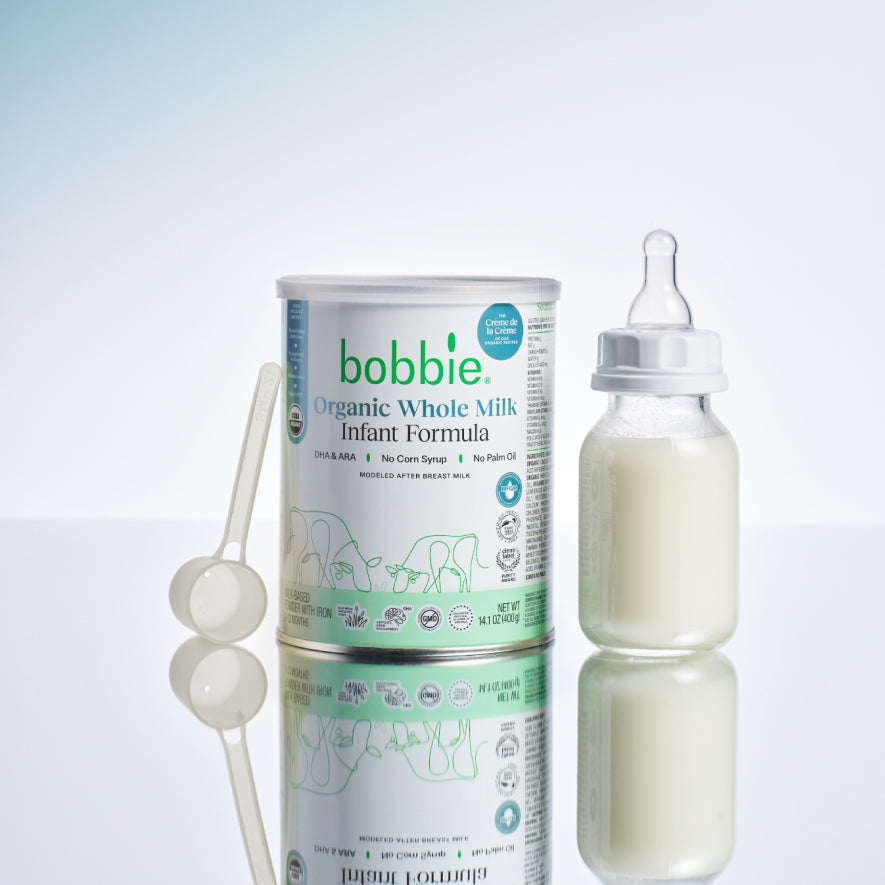
Shop Organic Whole Milk Infant Formula
Simple Ways To Make Breastfeeding More Comfortable and Effective
Build your nest. Your comfort changes everything. Stack pillows behind your back, slide a footstool under your feet and tuck a rolled towel under the forearm that supports your baby. When a breastfeeding parent is well-supported, milk letdown tends to cooperate and milk transfer is smoother.
Skin-to-skin at any age. Not just for day one. Ten minutes of skin-to-skin can reset a fussy feeding session, regulate temperature and heart rate and deepen latch. It’s a stealth tool for distracted older infants, too.
Reduce visual noise. Curiosity is developmentally great, but tough mid-feed. Dim the lights, face away from windows or offer a light swaddle to limit windmill arms. Many babies take fuller feeds in low-stimulation spaces; you may see session length increase slightly and effort decrease.
Keep essentials within reach. Water (aim to drink at every feeding), a one-handed snack, a burp cloth and whatever keeps you present — playlist, audiobook, quiet conversation. When your brain relaxes, milk tends to flow.
Don’t skip burping. Pause midway and at the end, especially if you hear big gulps with a fast letdown. Shifts in burping positions (upright, over-the-shoulder) can pull out a stubborn bubble and make the second breast more appealing.
Leverage your breast pump (strategically). If you’re painfully full or your milk flow blasts like a fire hose, hand-express or pump an ounce before latching to ease pressure and smooth the start. If you’re rebuilding milk supply, a brief pump (5–10 minutes) after several feeds in a day can nudge milk production upward without overtaxing you.
For tandem or twin feeds. A twin-style pillow, two rolled towels for extra elbow support and a game plan for switching sides can keep breastfeeding twins workable. Tandem can shorten your overall daily feeding time even if individual sessions run a bit longer at first.
Bonus well-being note. Regular nursing is associated in research with long-term health benefits for mother and baby, including a reduced risk of breast cancer for the breastfeeding parent. That’s a horizon-level perk while you focus on today’s latch.
Ask for Support When…
-
Feeds routinely stretch past an hour, and your baby still seems hungry.
-
You feel pain or pinching, see nipple damage, or you dread the next latch.
-
Diapers dip, weight gain stalls or your gut says, “this doesn’t feel right.”
That’s the moment for an IBCLC (lactation consultant) — in person or virtual. Small adjustments to positioning, latch or infant feeding rhythm often deliver big relief. If bottles are part of the plan, protect milk supply with a simple rhythm of nurse → bottle → pump, then taper as needed.
FAQs
Should I time breastfeeding sessions?
A timer can be training wheels in the early weeks. It’s useful to avoid very long gaps, to remind you to offer the second breast or to note the typical session length. Still, focus on feeding cues, swallows and how your baby settles afterward. Consistency matters.
What is the 3-3-3 or 6-6-6 “rule”?
Catchy numbers that circulate online. Real babies, however, prefer flexibility. Treat any numerical “rule” as, at best, a loose sketch. Your breastfeeding duration will ebb and flow with growth, sleep and the baby’s needs.
How often should I breastfeed a newborn?
Most breastfed babies feed 8–12 times in 24 hours. In the first couple of weeks, wake for daytime and evening feeds if stretches run long. Many families allow one longer stretch at night once a pediatrician confirms steady gain.
How do I count time between feeds?
Start-to-start. If you begin at 6:00 and again at 8:00, that’s a two-hour interval — even if the first nursing session lasted 30 minutes. Don’t chase perfect spacing; a workable rhythm emerges with practice.
When should I alternate breasts?
Let your baby finish the first side (swallowing slows, they pause or release), then burp and offer the second breast. Next feed, start on the opposite side. Tools like nursing bracelets, a note on your phone or a simple hair tie can help you remember.
My baby feeds only 8–10 minutes — enough?
Possibly. Older infants can transfer a full milk feed quickly. Check the bigger picture: swallows, diaper counts, contented behavior post-feed and growth. If anything feels off, get skilled eyes on the latch.
We’re doing some formula feeding. Will that change the session length?
It might. Bottles flow continuously, so the total feeding time can shorten. If you want to maintain milk supply, consider pumping near the times your baby takes bottles to keep your body’s “make milk” signals steady.
I love the clock, but my baby ignores it. Help?
Welcome to responsive feeding. Babies don’t follow spreadsheets; they follow hunger, thirst, growth and comfort cycles. Watch baby’s cues first; use the clock to avoid extreme gaps.
What about extended breastfeeding?
Extended breastfeeding (beyond 12 months) is common in many families and cultures. Session length often shortens and clusters around sleep or comfort. Do what works for your household.
Have additional questions? Explore bite-sized videos and weekly support with RNs and lactation consultants Emily Silver and Jamie O’Day in The Feeding Room.
However You Feed, You’re Doing It Right
There’s a wide span of normal in breastfeeding. Some days you’ll get quick, efficient feeds. Other days you’ll settle in for long, drowsy ones. You might continue exclusive breastfeeding, or you may pump, supplement or blend approaches as life shifts. All paths are valid.
Trust your baby, trust yourself and reach out early if something feels off. Small refinements like a different hold, a quieter corner, and a brief pre-latch hand-express can make today’s feeding smoother and tomorrow’s session shorter.
We’re here for the practical how-to and the heart behind it. Explore tools, classes and expert Q&As in The Feeding Room, and if formula is part of your plan, shop Bobbie.
The content on this site is for informational purposes only and not intended to be a substitute for professional medical advice, diagnosis or treatment. Discuss any health or feeding concerns with your infant’s pediatrician. Never disregard professional medical advice or delay it based on the content on this page.