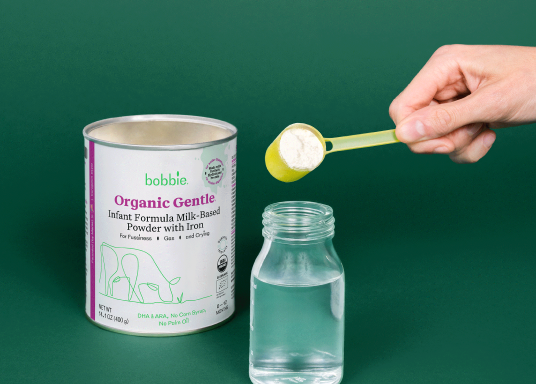


A Unique Approach to Infant Formula Manufacturing
Published February 11, 2026
Infant feeding journeys look different for every family, and that’s why infant formula plays such an important role in early nutrition. For many parents, baby formula is essential during a critical window of growth and brain development.
In the U.S., the infant formula landscape has long been shaped by a small number of large manufacturers. But recent supply disruptions pushed parents to look beyond ingredient lists and legacy players to pay closer attention to where and how infant formula is made, and what happens between the factory and their door.
Bobbie was founded to raise the bar. As a mom-founded and led infant formula company, we produce Bobbie in a fully integrated manufacturing facility in Ohio, where everything happens under one roof — from ingredient storage and formula manufacturing to canning and packaging. Fewer handoffs mean fewer touchpoints and greater control from start to finish.
In this post, we’ll break down how infant formula is made in the U.S., what safety testing and regulatory compliance look like, and how Bobbie’s manufacturing approach sets a new standard for transparency and trust.
Owning a manufacturing facility gives Bobbie direct oversight of every step of production, but what does that look like in practice? In this video, Bobbie COO Casey Bower explains the 2,000+ safety and quality checks performed on every batch, how ingredients are tested throughout production, and how parents can verify testing results through Bobbie's Transparency Tracker.
Watch: How Bobbie Tests Baby Formula for Safety
The Infant Formula Manufacturing Landscape in the U.S.
According to Today’s Dietitian, more than 80% of infants in the U.S. receive infant formula at some point during their first year — whether exclusively, alongside breast milk, or during transitions in infant feeding. For decades, store shelves have been stocked by a small number of commercial formula producers, with brands tied to Abbott Laboratories, Perrigo and Mead Johnson Nutrition supplying 80-90% of powdered formula nationwide.
This concentration supports efficiency at scale, but it also introduces risk. Traditional manufacturing often spans multiple locations: ingredients sourced in one place, formula blended in another, cans filled elsewhere and finished products shipped long distances before reaching families.
Each transfer adds complexity and increases contamination risk. During the 2022 Abbott recall and associated baby formula shortage, issues at a single facility disrupted access nationwide, highlighting how tightly connected — and fragile — the system had become.
Today, only a limited number of Food and Drug Administration (FDA)-registered facilities produce infant formula in the U.S., and the market itself is projected to grow over the next decade from roughly USD 6.56 billion in 2025 to USD 9.08 billion by 2035, reflecting continued demand for safe, high-quality infant nutrition. As a result, parents are paying closer attention to manufacturing, not just marketing, when choosing baby food for their infant or toddler.
What Goes Into Making Infant Formula in the U.S.
Regulation and Standards
All infant formula sold in the U.S. is regulated by the FDA and must meet strict nutrient and safety requirements. These standards govern everything from macronutrient and micronutrient levels to sanitation, testing and labeling.
The FDA framework aligns broadly with international guidelines such as Codex Alimentarius, which sets global benchmarks for infant nutrition. Still, how formula makers design their facilities and manage quality control can vary. Because infrastructure is limited, newer infant formula manufacturers are investing in modern, purpose-built facilities designed to support safety, traceability and resilience.
Common Formula Formats Families Use
Most families encounter formula in three primary forms:
-
Powdered infant formula, which is mixed with water.
-
Liquid concentrate formula, diluted with water before feeding.
-
Liquid ready-to-feed formula, which requires no preparation.
Some infants may need specialty formulas or specialized formula options based on guidance from a pediatric provider, including formulas designed for specific feeding needs or medical concerns. Regardless of format, all commercial formulas are designed to provide complete nutrition when breastmilk isn’t available or sufficient.
Sign up to get the scoop on feeding, sleep, poop, and so much more. By singing up for email, you are to receive marketing emails from Bobbie and can manage your email preferences or unsubscribe at anytime

Your go-to resource for all things new baby.
Bobbie’s Manufacturing Model: One Facility, One Team
Why Manufacturing in Ohio Matters
Bobbie manufactures its infant formula at a U.S.-based facility in Ohio built specifically for infant nutrition. Keeping production domestic shortens the supply chain, improves transparency, and helps deliver more consistent access for families who rely on formula every day.
What “Under One Roof” Really Means
Unlike many infant formula manufacturers, Bobbie operates a fully integrated facility. Ingredient storage, blending, canning and packaging all happen in the same place, with no third-party handoffs.
Fewer handoffs mean fewer touchpoints, and greater control over quality from start to finish.
-
How Bobbie Formula is Made: Bobbie’s manufacturing process is designed to keep quality, safety and transparency front and center. Every step happens under one roof, allowing for close oversight and consistency from start to finish.
-
Ingredient Sourcing and Verification: Organic ingredients, including grass-fed milk, are carefully sourced and tested before entering production to confirm quality and safety.
-
Blending and Production: Cow’s milk proteins are combined with organic lactose, fats and vitamins and minerals using precisely controlled equipment to support consistency and balanced infant nutrition.
-
Batch Testing: Finished batches of formula go through more than 2000 quality and safety checks to ensure the formula is nutritionally sound and contains no harmful bacteria or other inclusions.
-
Canning and Packaging: Once blended, powdered formula moves directly into sterilized cans within the same facility, helping protect freshness and reduce unnecessary handling.
-
Storage and Distribution Readiness: Finished formula is stored in climate-controlled conditions and prepared for shipment without leaving Bobbie’s oversight.
This closed-loop process allows full traceability, from ingredient sourcing to the can that reaches your door.
Testing, Safety and Ingredient Standards
Every batch of Bobbie infant formula undergoes rigorous testing for nutrient accuracy, contaminants and microbiological safety. Quality checks occur throughout the manufacturing process — not just at the end — supported by frequent environmental monitoring and third-party verification.
Bobbie’s manufacturing facility is fully registered with the FDA and operates in accordance with Current Good Manufacturing Practices (cGMPs). These requirements govern sanitation, quality control, recordkeeping and facility operations, ensuring formula is produced in a controlled, traceable environment. Nutritional standards and labeling requirements are carefully followed, with continuous monitoring and documentation maintained for every production run.
Beyond regulatory compliance, Bobbie’s formula is thoughtfully designed with organic lactose as the primary carbohydrate, added whey protein for digestibility, and DHA at levels aligned with European nutritional guidelines (20 mg per 100 kcal). Ingredients are carefully sourced and screened to avoid unnecessary additives and support infant nutrition during early development.
Meet the first and only USDA organic infant formula manufactured in the U.S.! Bobbie Organic Whole Milk Formula offers complete nutrition for baby's first year with our closest to breastmilk recipe.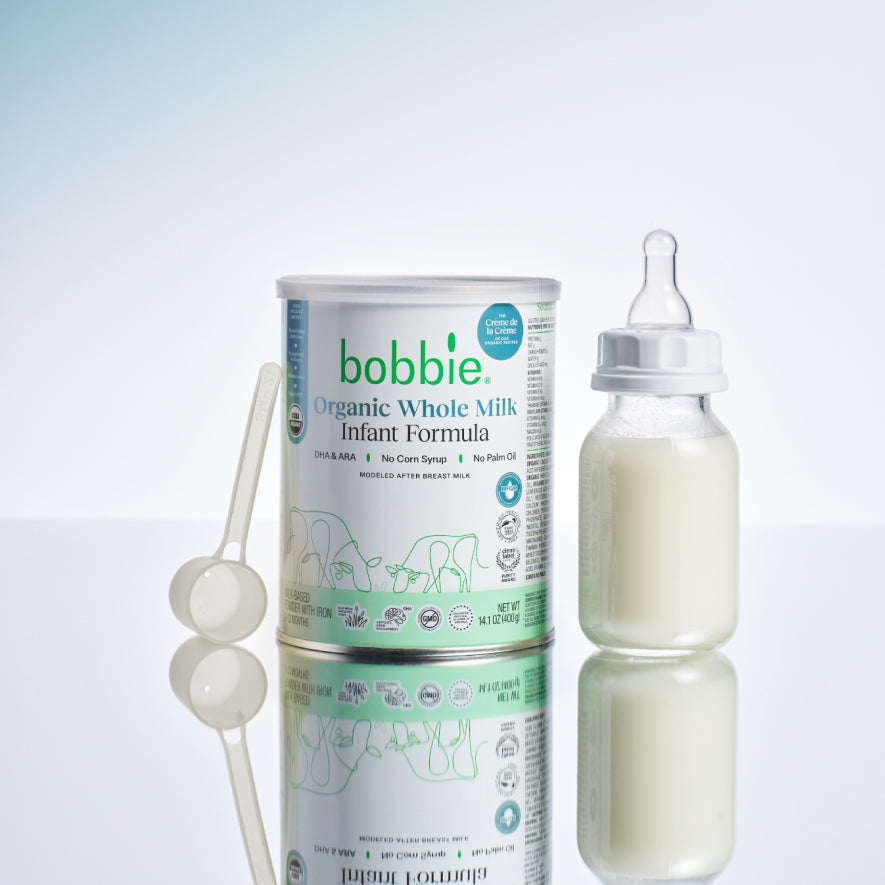
Shop Organic Whole Milk Infant Formula
Bobbie: Manufacturing Done Right
When it comes to infant formula, ingredients matter, but so does everything that happens before the can reaches your hands. How formula is made, where it’s produced and how closely it’s monitored all play a role in consistency, safety and trust.
Bobbie was built with that full picture in mind. By keeping manufacturing under one roof, investing in rigorous testing and prioritizing transparency at every step, we’re setting a higher standard for what modern infant formula can look like — and how it can be made.
Because families deserve confidence not just in what’s on the label, but in the process behind it.
Shop Bobbie today and experience infant formula made with care, transparency and control from start to finish.
The content on this site is for informational purposes only and not intended to be a substitute for professional medical advice, diagnosis or treatment. Discuss any health or feeding concerns with your infant’s pediatrician. Never disregard professional medical advice or delay it based on the content on this page.