

Does Baby Formula Have Seed Oils? The Role of Seed Oils in Baby Formula
Published January 21, 2025
Last Updated:
Yes, all infant formulas legally sold in the U.S. contain seed oils. Seed oils provide essential fatty acids that support a baby's growth and development, and they're commonly used to help mimic the fat composition of breast milk. Different formulas use different blends of oils, but all infant formulas sold in the United States must meet strict FDA nutrition requirements. Choosing the right formula is a big decision—it’s all about supporting your little one’s growth and future health. Today, parents are looking more closely than ever at what goes into their baby’s formula, and seed oil ingredients are sparking curiosity.
That's why we're exploring the role of seed (and other plant-based) oils in infant formula, their nutritional benefits, and why they’re a must-have for healthy infant growth. You’ll also find practical tips on transitioning to a new formula with ease—so your baby receives the nourishment they need for a healthy and happy start!
Why Does Baby Formula Have Seed Oils?
Seed oils are oils pressed from seeds like sunflower, canola, grapeseed, safflower, soybean, and corn. Packed with unsaturated fats—both monounsaturated and polyunsaturated—they offer a unique nutritional profile, with just a small amount of saturated fats.
So, why are seed oils used in infant formulas?
Simply put, newborns need plenty of fat! Research from the National Library of Medicine shows that about 50% of a baby’s calories must come from fats—mostly as triglycerides. Modeled after the fat content of breastmilk, infant formulas meet this need by using blends of vegetable oils—including seed oils—to provide certain fatty acids in certain ratios, like palmitic acid, oleic acid, and linoleic acid.
Because seed oils are rich in essential fatty acids, like omega-6 and omega-3, they help provide the right balance of nutrients and calories for growing infants. This supports healthy brain development, immune function, and cell growth during a critical stage of their life.
Do All Baby Formulas Have Seed Oils?
All regulated infant formulas contain a blend of vegetable oils and seed oils because they provide essential fatty acids required for infant nutrition. While the exact oils vary by brand, formulas include ingredients such as sunflower, safflower, coconut, palm, soybean, and/or high-oleic oils. Some formulas may also use dairy fat or milk fat alongside vegetable oils.
Why Are Some Parents Concerned About Seed Oils?
Some parents may have concerns about seed oils in infant formulas, often due to potential misunderstandings about their effects. However, all baby formulas include a blend of vegetable oils to meet the Food and Drug Administration's requirements for fatty acids in formula. The type and mix of oils helps determine how much fat and calcium a baby absorbs—both essential nutrients for healthy growth and development.
Parents can rest assured that formulas are carefully crafted to provide the right balance of fats that support overall nutrition. And seed oils play an important role in supporting these needs, making their use in formula both safe and beneficial in the right amounts.
Does Bobbie Formula Have Seed Oils?
Yes. Bobbie Organic Whole Milk formula contains a thoughtfully balanced, proprietary blend of organic fats, including organic linoleic sunflower oil, organic high oleic sunflower oil, organic coconut oil and organic low erucic acid rapeseed oil. These oils, plus milk fat from organic whole milk, provide essential fatty acids that support healthy growth and development and are carefully selected as part of Bobbie's complete nutritional profile.
No single fat source can replicate the complex fat composition of breast milk. That's why infant formulas use a blend of fats to provide the essential fatty acids babies need during their first year. Bobbie's proprietary organic fat blend is rich in fatty acids that support brain development and cellular growth, combining organic whole milk with carefully selected organic, expeller-pressed oils to create a balanced fat profile.
Why Bobbie Says No to Palm Oil
While palm oil is commonly used in infant formula because it helps match the palmitic acid profile of human milk, Bobbie Organic Whole Milk formula is made without palm oil.
Instead, Bobbie uses naturally occurring milk fat from organic whole milk, which contains palmitic acid in the sn-2 position of the triglyceride—the same position where much of the palmitic acid in human milk is found and where it is more readily absorbed. This allows Bobbie to achieve its nutritional goals without relying on palm oil.
Parents often compare formulas based on individual ingredients like seed oils or palm oil, but it's important to look at the complete formulation. Every ingredient in Bobbie serves a specific nutritional purpose and is selected with safety, quality, and scientific evidence in mind. Learn more about the philosophy behind our ingredients on our Why I Roll with Bobbie page.
Like all infant formulas sold in the U.S., Bobbie formulas must meet strict FDA nutritional and safety requirements. Bobbie also performs rigorous quality testing and carefully sources its ingredients to help ensure every bottle meets high standards for safety and nutrition. Learn more about Bobbie's commitment to formula safety and the steps we take throughout manufacturing and quality assurance.
What Are the Benefits of Seed Oil in Baby Formula?
With parents eager to learn more about the role of seed oils in formula, let’s explore the expert-backed benefits these options offer for infants:
1. Packed With Essential Fatty Acids
According to the American Academy of Pediatrics, seed oils (like sunflower, soybean, and canola oil) are rich in polyunsaturated and monounsaturated fats—like the ones found in breastmilk! Put simply, they're important nutrients for your little one's brain and overall growth.
2. Supports Health
Seed oils contain omega-3 and omega-6 fatty acids which support your baby’s development.
3. Easily Digestible
Seed oils are gentle on your baby’s tummy, offering a fat source that’s easy to absorb and digest!
4. Mirrors Breast Milk
The National Library of Medicine reports many seed oils are used in formulas because they closely mirror the fatty acid profile of breast milk—offering similar nutritional benefits. This makes them an effective choice for supporting your baby's needs during their early months.
5. Clean and Safe Ingredients
Some formulas focus on clean, simple ingredients—with no artificial preservatives or additives. Organic oils are expeller-pressed and sourced without the use of chemical solvents like hexane! That way, you can feel more confident about what’s in your baby’s bottle.
Practical Tips for Switching to a New Baby Formula
Introducing a new formula to your baby is an exciting step in their growth journey—but it’s normal to feel a little nervous about the change. With these simple tips, you can make the transition as smooth as possible:
- Consult your pediatrician: Before making any changes to their diet, consult your pediatrician and make sure the new formula is a good fit for your baby’s nutritional needs and development.
- Ease into it or not: Some parents prefer to gradually mix the new formula with your baby’s current one over several days, increasing the ratio of the new formula over time. This gives your little one’s tummy time to adjust. Others prefer to switch ‘cold turkey’!
- Monitor for reactions: Changes in stool color, texture, and frequency, as well as increases in gas or fussiness can be common during the transition period! Keep an eye out for any signs of allergy, like hives, blood in your baby’s stool, or significant changes in mood. If something seems off, be sure to reach out to your pediatrician.
- Make hydration a priority: Make sure your baby is staying hydrated during the transition—it helps with digestion and overall comfort.
- Stay patient and flexible: Remember, every baby is unique. Some adapt quickly, while others need a little extra time. Stay patient and be ready to adjust as needed!
Seed Oil Infant Formula FAQs
Interested in learning more about seed oil-based formulas? Here are answers to some frequently asked questions to get you started:
Do all baby formulas have seed oils?
ALL infant formulas sold in the United States contain seed oils! To learn which ones, you can always check the ingredient list on the formula packaging. Here are a few common oils to look for:
- Sunflower oil
- Soybean oil
- Canola oil (also known as low erucic acid rapeseed oil)
- Safflower oil
- Palm kernal oil
Is formula with seed oil suitable for all infants?
For most babies, formulas with seed oils are not only a safe and nutritious choice—they’re required to provide essential fatty acids for growth! However, some babies (like those with malabsorption disorders) might need different oils, such as MCT oil. Reach out to your pediatrician for further guidance.
What should I do if my baby reacts to the new formula?
If your baby shows signs of discomfort, like gas or spit-up, know this can be a common part of the transition process. If symptoms continue beyond seven days on the new formula, be sure to consult your pediatrician. They can help you figure out if the formula needs to be switched or if further testing is needed.
How long does it take for babies to adjust to a new formula?
It can take up to a week for babies to fully adjust to a new formula. Some minor digestive changes are normal at first, but if it continues, it's a good idea to check in with your pediatrician.
What are some alternative formula options if my baby is sensitive to certain ingredients?
If your baby seems sensitive to certain ingredients, the right formula depends on what's causing the sensitivity. For babies with occasional fussiness or digestive discomfort, a gentle formula like Bobbie Organic Gentle may be a good option, as it's made with partially hydrolyzed whey proteins that are easier to digest. If you're looking for a formula made with organic whole milk and no palm oil, Bobbie Organic Whole Milk offers a thoughtfully designed fat blend while providing complete nutrition.
Is it safe to combine breast milk with prepared formula?
Absolutely! It’s not only safe to combine breast milk with prepared formula, but many parents do this to supplement breastfeeding—ensuring their little one gets enough nutrition. Just be sure to follow your pediatrician's recommended guidelines.
Choosing the Right Formula for Your Little One’s Needs
Finding the right formula is essential to meeting your baby’s unique nutritional needs. And formulas with seed oils provide the essential fatty acids and calories that support their healthy growth and development.
Looking for a trusted formula? Bobbie offers a high-quality, clean-label option you can rely on. Support your baby with a formula that’s pure, nutritious and safe.
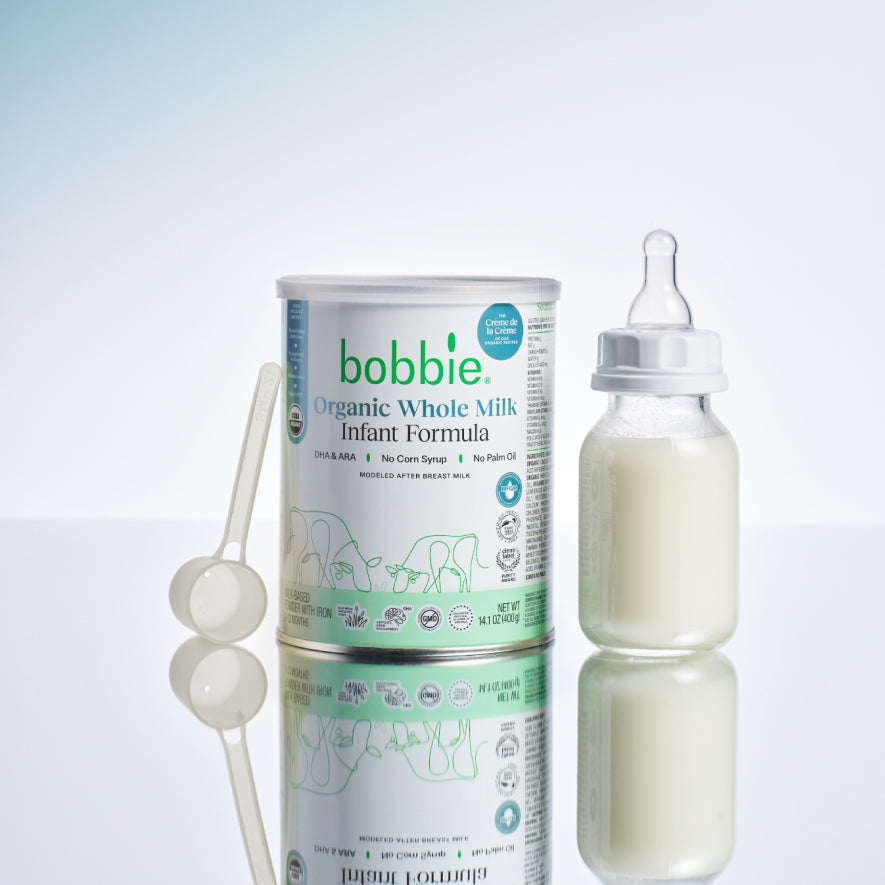
Meet the first and only USDA organic infant formula manufactured in the U.S.! Bobbie Organic Whole Milk Formula offers complete nutrition for baby's first year with our closest to breastmilk recipe.
Ready to give your little one a healthy start? Shop Bobbie organic infant formula today!
Shop Organic Whole Milk Infant Formula
The content on this site is for informational purposes only and not intended to be a substitute for professional medical advice, diagnosis or treatment. Discuss any health or feeding concerns with your infant’s pediatrician. Never disregard professional medical advice or delay it based on the content on this page.